Scaffolding

The coldest winter has hit the sunshine island, forcing me to slow down. That slowing gave me space to think about life, about the choices that led me here. And since my AuDHD brain is very good at jumping from one thought to the next, I landed on this one.

Scaffolding

Every building people admire often stands on labor they’re trained not to see.

But I did see it

It was a beautiful morning. We decided to walk toward Sacré Coeur when the city was still quiet—six in the morning, Paris before it performs for anyone. You stand there and you are astounded by its beauty. White, heavy, almost floating above everything else.

Magnificent

Opulent

The kind of beauty that slows your body down. The kind people photograph.

And yes, it is beautiful.

But as the awe settled, I found myself looking again. And then looking past it.

There is a strange moment that happens when you stand there long enough. Not just passing through, not just admiring, but staying. You’re caught between two worlds. One is the world of the finished thing—the monument, the symbol, the polished object meant to be admired. The other is the world behind it, and before it.

In that space, I move backward in time.

I imagine the years before machines made weight lighter and labor quieter. When building meant hands.

Sweat

Blood

Human bodies hauling, lifting, pulling.

Backs bent under stone. Muscles measuring the limits of endurance.

What we now call heritage was once exhaustion. It is beauty, but was once strain.

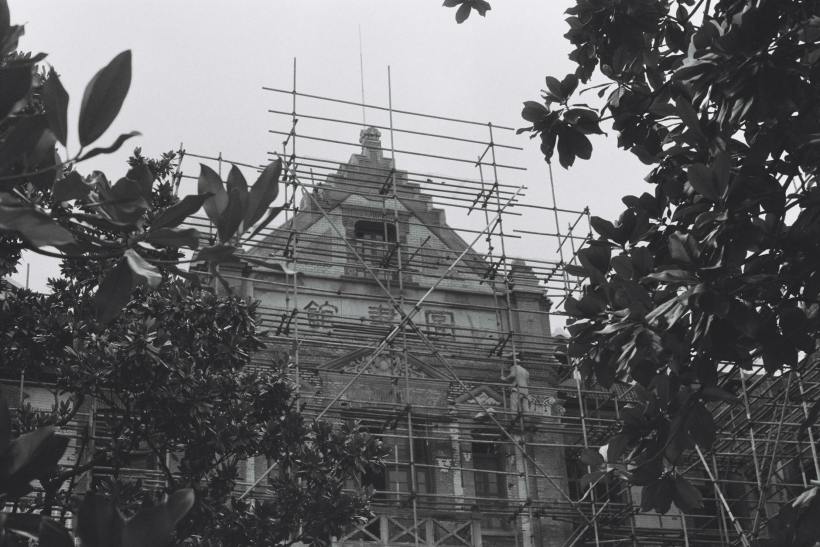
I’ve felt this before too—standing beneath the Eiffel Tower, looking up at all that elegance and suddenly seeing what once wrapped around it: scaffolding. The temporary skeleton. The structure that made the impossible possible and was then removed so the illusion could stand alone.

Scaffolding is never invited to the opening ceremony.

It doesn’t have opulence

It doesn’t glitter

It doesn’t curve beautifully

It exists to hold, not to be admired

What unsettles me is not only that work made by hands is still looked down upon—but that not all work done by hand is treated the same.

Some handwork is elevated, framed, protected. A painting. A sculpture. A certain kind of craft. It becomes art—elitist, valuable, museum-worthy. Other work done by hands remains what it has always been: necessary, physical, and quietly disregarded. Cleaning. Building. Maintaining. Holding things together so something else can shine.

The same body

The same hands

Radically different status

I think about this often when it comes to food. A chef trained in elite schools is celebrated for mastery, innovation, artistry. Years of education justify the value placed on their hands. And then there is the street vendor—someone who never had access to that education, but who spends the same hours over heat and repetition, refining taste through practice and risk. The labor is no less skilled. It is simply framed differently. One becomes culture. The other remains necessity.

I think of Pierre Bourdieu, and how taste is never neutral—how we are taught what counts as legitimate, refined, worthy of admiration. Education matters, yes. Skill matters. Discipline matters. But so does access. So does permission. So does who is allowed the time and safety to turn labor into prestige.

And this way of seeing did not stop at monuments or theory. I carried it into my own life.

I have spent countless hours learning and practicing—cakes, techniques, precision. I have invested time and money into getting better, into honoring the craft. And still, somewhere underneath, there was fear. Fear that skill alone would never be enough. Fear that without the right stamp, the right institution, the right credential, my hands would never be seen as credible.

So I wanted to further my education not only to learn, but to be legible. To be allowed into the category where effort is recognized, where work by hand is permitted to become something more than survival.

This is what scaffolding does to you when you see it clearly. It makes you aware of the quiet rules. Of how much labor is required not just to build something—but to have it acknowledged as valuable.

There are days when my hands do invisible work so other things can stand. Work that gives me quiet. Solitude. Time to think. Time to listen. Work that funds my voice, my writing, my press—my creative and political labor. This work is not who I am. But it is what holds what I am.

This is what scaffolding does.

It supports something that will one day be allowed to stand on its own. And when that happens, it will be quietly removed.

No plaque

No applause

No ceremony

The world doesn’t clap for scaffolding.

It only applauds the finished building.

But I have stood in that in-between space. I have felt the weight of what is carried and erased. And once you see it, you can’t unsee it.

Some of us are trained to admire

Some of us are trained to build

And some of us, for reasons we don’t fully choose, are the ones who notice what holds everything else up.

Therese

Softness as a Steel

Taught to carry on

Always carry on

Rest is for the weak

Giving up is for those who have no backbone

So you bend forward 

Touch the floor with your forehead 

to please

Then bend inward

Crushing your heart 

Stiffling your soul 

Because what you needed was inconsequential 

You did this for years 

Mastered the game for others

Alienating all the versions of you

Until you walked through a long winded hallway

And a mirror reflected a version of you 

So mangled 

You do not recognize the eyes that stared back at you

You

But not really 

It’s all of them 

For them 

Always for them

In a spark of revolution 

An insurmountable repulsion

You spat at the reflection

Anger needed to be released

To give space to something else

Pieces fell down

The crashing sound was not that scary after all

Anger and shattered glass felt right

Tiptoeing on the shards 

To collect or to throw

You picked up a piece that once reflected your face 

Freckles and paleness

A beautiful conundrum of acceptance and othering 

One 

Another angular piece reflecting you wavy hair

Once tamed by chemicals to be accepted as beautiful now carries stories of women who lived before you

Untamable and resourceful

Two

This shard was tiny

But her eyes were mad

She was forgotten but now clearly reflected

She stared back and demanded to be recognized

You picked that tiny piece 

And slowly gathered 

Them

They

Because all the shards were all yours 

You decide which ones take the center of the mosaic

Not them

You

You decided 

You

And when the mosaic held

Your fingerprints across every shard

Your ancestors hummed in the quiet

Not with pride

But with recognition

Because you had done

What they were never allowed to do

You chose the pieces

You chose the shape

You chose the life

Softness intact

Steel awakened

You, whole

At last.

***

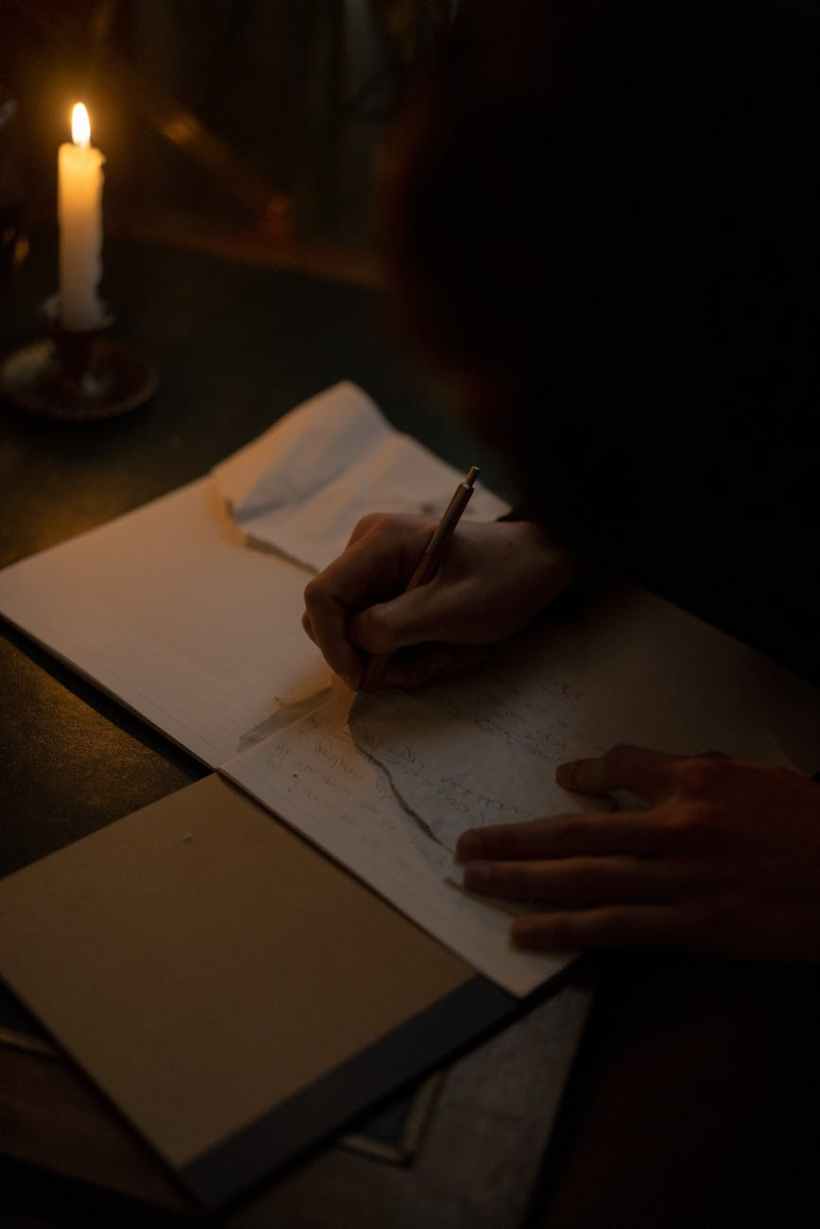
I caught myself writing poetry again.

The kind that never rhymes,

the kind that makes me wonder if it’s even poetry at all.

But maybe poetry isn’t about rhyme — maybe it’s about truth breaking loose in whatever shape it needs.

So here is one of those pieces.

One that arrived uninvited, but insisted on being written.

In the middle of the chaos, at a hospital reception hall.

When the Pebble Finally Hit the Water

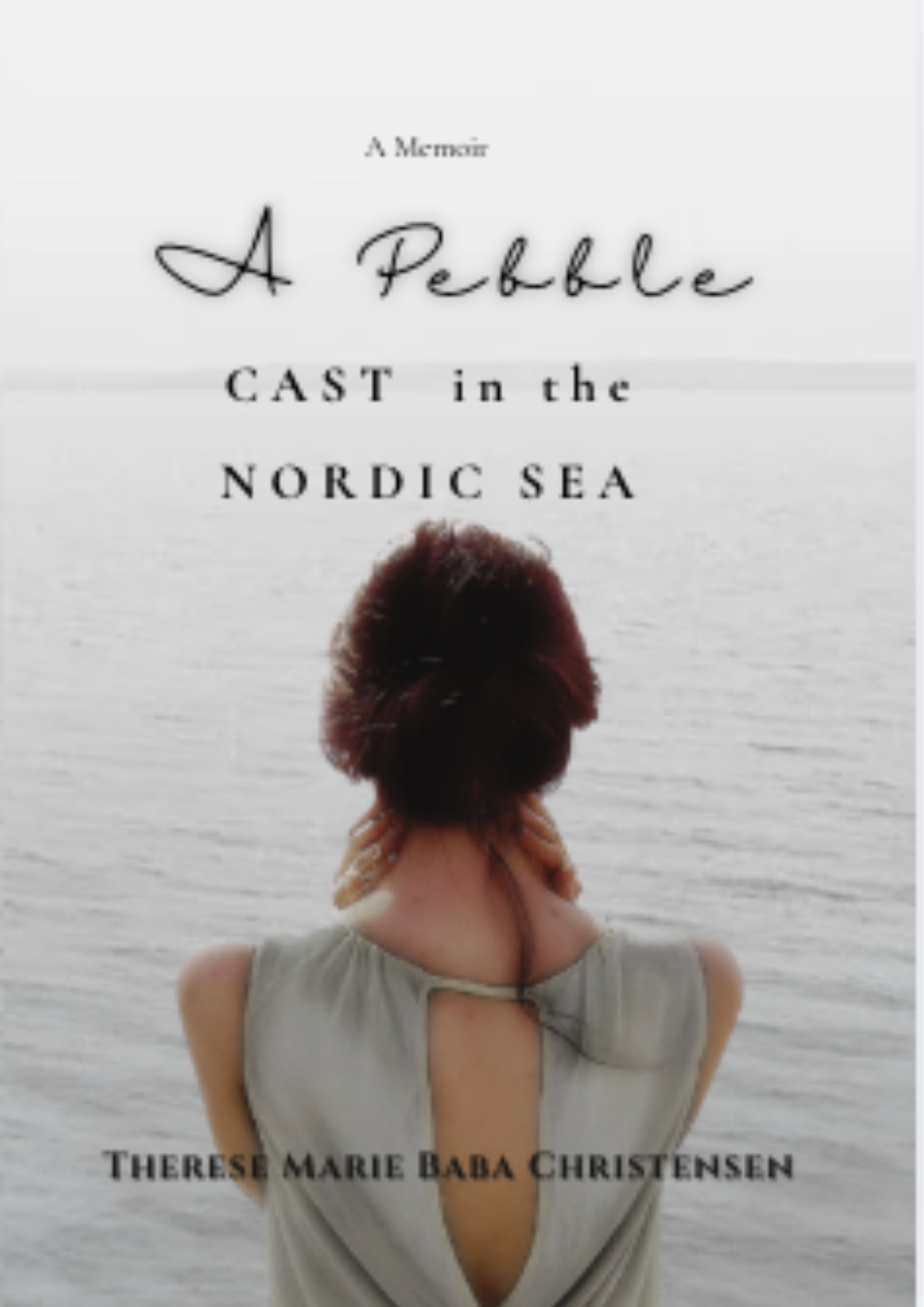
My book, A Pebble Cast in the Nordic Sea, is out in the world.

It feels unreal to say that sentence. Writing a book was one thing–living with it, doubting it, accepting it– but releasing it? That’s a different kind of vulnerability. It’s baring your soul to people who you might have only seen the performative version of you. It’s letting people you might have held less than 5-minute conversations to see the unglamorous version of you for the goal of owning your voice and to be a possible anchor for someone who might be feeling alone and see a mirror in the pages. It’s not mine anymore; it now belongs to the world.

It’s a mix of pride and peace with a thin thread of fear woven in. Pride, because this story carries my voice and the voices of women who had been silenced too long. Peace, because I finally let go. And fear, because releasing truth– especially lived truth–is never neat.

When I hold the printed pages now, I don’t see perfection. Oh, it is far from perfect. But there is stillness. I know the indecisiveness in certain parts and pages, but I can also remember how rebellion and the sheer audacity to dare won.

This memoir is not just mine–it’s a collective exhale. It is for the woman who left home and found both freedom, loneliness, to belong and be othered at the same time in another country. It’s for the woman who questions the rules she was told to obey. It’s for anyone who has ever stood at the edge of the unknown with shaking hands, steady eyes, and decided to leap anyway.

I wrote this hoping that someone, somewhere, will pick it up and feel less alone. That they’ll recognize themselves in the pages and think, maybe I was brave in ways the world didn’t see.

I’ve learned that once you release something honest, it no longer belongs only to you. It is now for everyone who finds a fragment of themselves inside it. And that in itself is beautiful. The real ripple–and I’m grateful it has begun.

Therese Marie Baba Christensen

To My Daughter, If Ever One Day

By Therese Christensen

There was a time in my life when I worked in the field, supporting women who had survived violence. Some days were heavier than others—days when I’d find myself sitting alone in a café, trying to process what I had witnessed, feeling like the weight of their stories had followed me home.

Sometimes, I escaped into romance novels. I bought nearly a thousand Kindle books. It was a safe kind of escape—where endings were predictable, where love was uncomplicated, where everything turned out okay.

But there were days when even fiction couldn’t hold me. Days when the pain I carried wasn’t mine to tell, but still needed a place to go. I was bound by tavshedspligt—a confidentiality agreement—so I couldn’t speak the stories. I wrote instead.

I remember typing these words into the Notes app on my MacBook. At first, I thought I was writing to a future daughter. But really, I think I was writing to the women I had sat with—the girls they once were—before the harm, before the silence.

Maybe I just wanted someone, anyone, to whisper in their ear: You are enough.


🌿 A Note in Retrospect

Reading this again, years later, I notice lines that don’t sit quite right with me now. For instance, the phrase: “If he chooses you as a partner…” feels off. It implies that the woman is waiting to be chosen like her worth depends on someone else’s validation. And that’s not what I believe.

The truth is, I have always believed in a woman’s agency. That has never changed.

But when I wrote this, I was echoing the voices of women in survival mode. So many of them told me they felt lucky just to be the chosen girlfriend or wife. That kind of language can be painful to hear but it’s real. And when someone is in survival mode, logic doesn’t always reach them. What does is compassion. Understanding. A hand extended, not a lecture.

This poem wasn’t meant to be perfect. It was meant to be safe. A quiet offering to women who hadn’t yet remembered their own power– but who were always worthy of it.


To My Daughter, If Ever One Day

Baby,
I know you love him
but never make him your world.

I know you just want to be a good wife,
but never at the expense of forgetting your worth.

I know you value his input,
but never doubt your own capabilities.

I know you’re being understanding of his work,
but don’t forget—you have a life to live too.

You are his equal.
If he chooses you as a partner,
he should see you as one.

Pamper him if you must,
but know the difference between caring for a man
and raising one.

You are not his mother.
You are his wife.

There are things you cannot change about him.
Some lessons come too late to be learned.
So choose wisely.
Take your time.

Know him.
Know yourself.

Marriage is not a marathon.
It’s a daily commitment
to yourself,
to him,
to honoring what you’ve chosen
again, and again, and again.

But since it is a marathon,
you don’t step into it unprepared.
You train.
You rest.
You build your strength.
You know your pace.
You come into it whole
knowing you are bringing something worthy.

Because you are.
And if no one ever told you that
let this be the first time.


Closing Reflection

I wrote this from a place of both exhaustion and hope. And now, with more distance, I offer it again this time with gentleness for the women who are still finding their voices, and for those of us who are still unlearning what we were taught about love, power, and worth.

If this speaks to you, I hope you’ll hold onto it. Share it if it feels right. Or just let it sit quietly with you for a while.

We all deserve to be reminded that we are whole.

You Haven’t Seen Me Do It Yet

She was the version of you that was a dreamer, the one who held the magazine in her hands and asked, What do these people do? The ones who wrote poetry.

Your brother was a year older than you. When he started high school at a new school, you stayed behind to finish grade school. One day, he came home with a school magazine, excited to show you all the new things about his school. You flipped through the first few pages absentmindedly—until you reached the literary section.

That’s where it happened.

Poetry, written by students. Words arranged in a way that felt like magic. Something inside you stirred, as if a hidden part of you had been awakened. You were twelve when the voices outside no longer mattered. You had already decided—you wanted to write. There was something powerful about it, something in the way words could transform a moment, a feeling, a life. It was enough to make you forget, for a while, about wanting to be a fighter pilot.

That magazine sat in your bedroom for so long, a quiet reminder of what you loved. But then the world outside began to rattle you. You saw what everyone else was doing, weighed reality against the uncertain path of a writer. Stability was what they all chased. Nursing, they said. So you can leave the country, build a future.

But in your heart, writing pulsed louder than reason. Still, the warnings came: There’s no money in it.

Yet you were never the type to listen, were you?

Decades later, during an online writing course, you were given a task: Picture a version of yourself who could help you push past the block that felt like a boulder in your writing process. It was an interesting exercise, but you hadn’t expected the realization that followed.

The 39-year-old you needed the 12-year-old you—the girl who was so sure about writing. She might not have been confident in other things, but she knew, without a doubt, that she could write.

Then the coach asked us to name that thing, that object we envisioned—something to carry with us whenever we needed it again.

I thought for a moment before answering.

“You,” I said. “Myself. All the versions of me.”

If there’s one thing both fantastic and dangerous about you, it’s that you tend to answer doubt with a simple, unwavering:

“Well, you haven’t seen me do it yet.”

Chapter 1, Part 2: Thrown Into a New Reality

Standing in the middle of Copenhagen Airport, I was surrounded by a flood of arriving and departing passengers. My legs were frozen, my thoughts tangled. This was the farthest I’d ever been from home, and reality was setting in: I was completely on my own.

I had just survived my first international flight, a terrifying encounter with the National Bureau of Investigation, and the silent anxiety of pretending I had it all together. But now, the adrenaline was wearing off. The signs were in Danish. The people looked nothing like me. The air smelled different. Everything felt foreign.

My undiagnosed Autistic ADHD kicked in full force. The chaos of noise—announcements, luggage wheels, people rushing past—overwhelmed my senses. I didn’t know what a meltdown was back then, but I remember the symptoms clearly: dizziness, cold sweats, a racing heart. It was the same feeling I would later recognize as a panic attack.

But in that moment, I did what I had always done—I masked. I smiled and kept moving, even though I could barely read the signs.

There was something about how the air hit my face that morning—crisp, sharp, unfamiliar. The colors were different too. Cooler tones. Harsher light.

I wasn’t looking for anything familiar. I was too caught up in the difference—the way everything looked, sounded, even smelled. Strangely, the unfamiliarity soothed me. It felt like stepping into a world that didn’t expect me to belong, and for the first time, that felt like a kind of safety.

“Therese, what have you gotten yourself into?” I remember thinking.

Just then, like a beacon of light, I spotted a young man in a green shirt that read “ASK ME.”
I walked straight to him and asked how to get to my terminal for the domestic flight to Karup.

He kindly explained that I needed to take the free shuttle to Terminal 2, pointing outside.
“Across the street,” he said.

Still high from anxiety and confusion, I asked—very seriously—“Wouldn’t it be better if I just take a cab?”

He laughed. Gently. Not mean, just amused.

I took that laugh in both ways—with curiosity and confusion. Was there something I wasn’t seeing? Was I missing something crucial? I wasn’t angry, just uncertain.

That moment was my first taste of cultural difference, though I wouldn’t fully understand it until much later. I didn’t know then that Denmark is one of the most expensive countries in the world to take a taxi. That laugh wasn’t mocking, but it left me wondering what rules I hadn’t yet learned.

So I thanked him and stepped out of the terminal. The sunlight was bright, but not warm. It had a bite to it. Across the street, I spotted the shuttle stop—a small, glass-covered waiting area. Nothing fancy, just functional.

I stood there alone, soaking it all in. The quiet was surreal. No honking horns, no shouting vendors, no traffic rumbling in the background. Just stillness. A kind of silence that felt both comforting and intimidating. The air was clean, the surroundings orderly—so different from what I was used to. In that stillness, my thoughts felt louder, like they had nowhere to hide.

And then, right there, my suitcase betrayed me.

It popped open with a soft but very public thud, spilling out the organized chaos I had packed just days before—jeans, a sweater, my four pocketbooks (painstakingly chosen because of the limited space), and a folder containing my au pair contract.

My life scattered in front of the Hilton hotel entrance like an accidental overshare.

The bus driver gave me a look that felt like a ticking clock. I scrambled to gather everything.

This wasn’t home anymore.

I shoved the zipper closed and dragged my suitcase onto the shuttle. The seats were clean and stiff, and the windows offered a surreal view of manicured streets and pristine sidewalks.

As the shuttle pulled away, I looked out the window and took my first real breath since landing.

I whispered to myself, You did it.
Even though everything in me was saying, You have no idea what you’re doing.

When we arrived at Terminal 1, I reminded myself to act like I knew where I was going, that I belonged here, that this wasn’t my first rodeo. I repeated the mantra my best friend from high school used to say: “You gotta fake it until you make it.”

I followed the signs with my head up, shoulders back, trying to carry myself like someone who belonged—even if, inside, I was unraveling.

I remember thinking:
No one here knows me.
No one knows my name.
No one knows what I left behind.
No one knows what I’m afraid of.

And for the first time in my life,
I was truly alone.

But also—for the first time,
I was free.

It was the kind of freedom you feel right before you rappel down a cliff—feet on the edge, rope in hand, suspended between trust and terror.


💬 Coming next: Meeting my host family, the open-faced sandwich surprise, and learning what it really means to “start over.”

💙 Have you ever felt completely out of place but knew you had to keep going? I’d love to hear your story in the comments.

Foreword: Stories Had to Start Somewhere

In 2008, a young woman of twenty-two years old dared to take the adventure of a lifetime. She left her country and ventured into something new. She was the first from her family to leave the safety of home. She relinquished connections and stability to test her boundaries and see how much further she could go until she broke. Armed with two pieces of luggage—one with her clothes and everything she thought she would need for eighteen months, and the other filled with idealism and naivety, wrapped in a sparkling smile and enthusiasm—she was ready to embrace everything new.

It was monumental.
It was freedom.
It was heartbreak, but it was also an awakening.

I always toyed with the idea of writing about my experience as a young Filipina migrant woman in Denmark. There are so many things I want to share. But I always decided against it because I thought it was too egotistical to write about oneself. I always had this little voice in my head questioning my own experience. How can I have the audacity to think that my experience is so unique that people would actually want to read my story? There are a million Filipino migrant women in the world—so why my story? This bugged me for years.

But then I realized—it was not about me. It was about the chance I was given to be in the middle of so many different lives, witnessing struggles and hurts that all mirrored one another. I was simply there, observing, feeling, and penning them. I could flesh out the experiences through my words and allow the pain and the struggle to be exposed for what they are, without glossing over the authenticity of a migrant’s experience. To open wounds so they wouldn’t fester on the inside. And to let my story speak for the ones who have been silent for too long.

Stories were written about us—we listened to what was told about us. But now, it’s time to reclaim the narrative, to tell the story from our own lenses and experience. Our stories. Our voices.

We are often seen as “the good” migrant community. Sometimes, we don’t want to challenge that perception because the consequences can be severe for those living abroad, supporting families back home. These consequences range from the instability of one’s right to stay in the country to the fear of losing one’s child after leaving an abusive relationship. There is the fear of being ostracized by the Filipino community for not fitting into the mold of the “good Filipina woman,” even from a continent away. And then there’s the looming fear of the hunger the family left behind might have to face at home.

She—the migrant woman—already juggles multiple identities: a good migrant, a woman, a mother, a wife, a sister, a daughter, a survivor, an adventurer, liberated and shackled all at once. She has to play all these roles flawlessly, but who taught her that these are the rules?

We were taught to play by the rules.
We were taught to always obey authority.
We played by the rules, we obeyed authority, but we forgot that the game had changed.
The rules we learned didn’t apply to our current situation, and the authority we were told to respect crossed our boundaries. They took our “no’s” as “yes,” and our silence as acceptance and submission.

Yet, we still want to be the “good migrant.” The woman who gives her warmth and smile. But sometimes you can still be a “good migrant” who smiles—a smile wrapped with a meaningful “fuck you” to whoever thought of you as nothing more than a doormat.

They said I had good material to write a book. That my collated experience as a migrant woman working for migrant women would be enough to break the silence. But then I paused.

Silence.
Writing.
Thoughts in images flashed before my eyes so fast, like 200 km/h. Each frame a story demanding to be told.

Can I really do justice to their stories? Will my writing be good enough for even a slight change? In the safety of my own home, where I hug my boys to sleep each night and share a warm blanket with my husband, there is a fight. A fight beyond me, beyond my fears. A fight that I still burn for—a battle raging against patriarchy.

The current political climate in Denmark tends to erase the existence of these migrant women in subtle ways, smothering them into silence with policies that leave them vulnerable. Their narratives are wiped out, their experiences invalidated, as their silent cries are ignored.

I was at a conference in Cairo, talking to someone about our advocacy. He told me that he fully understood he wouldn’t see the impact of his work in his lifetime.

I replied,
“We are but a pebble—I’m not naïve to not consider that—but I believe in the ripple.”

This book is my pebble.
I’m casting it into the cold, still waters of the Nordic Sea, hoping for a ripple wide enough to shake the silence.


Chapter 1, Part 1: Young Idealist – The Beginning of a Journey

I was rocking my white ribbed tank top, blue low-rise jeans, a pair of brown suede boots, and a brown furry factory-defect Abercrombie and Fitch jacket. It was the most outrageous outfit to wear for an early summer morning in July 2008. But there I was, stepping onto Danish soil for the first time at Copenhagen International Airport—excited, nervous, and completely unaware of the whirlwind that lay ahead.

Inside my backpack was my passport, freshly stamped with a tourist visa for Denmark. But I wasn’t here to be a tourist. I was about to start a new life as an au pair for a Danish family in Jutland.

Getting here hadn’t been easy. Securing an au pair visa required navigating layers of bureaucracy back home in the Philippines. But the real adventure began long before I even boarded the plane.

I had been singled out by an agent from the National Bureau of Investigation during random checks for departing passengers at the airport. There were long lines of travelers queuing for early baggage drop-off, and as I stood there waiting, the agent spotted me.

“Where are you going?” he asked.

“Denmark,” I replied.

“Traveling as a tourist?”

“Yes,” I added, keeping my face neutral.

He nodded, then motioned for me to follow him to their office. That was the moment my fate for the day became uncertain.


Coming Next: Chapter 1, Part 2: Thrown Into a New Reality

My arrival in Denmark, navigating a foreign airport, and the moment I realized I was truly alone for the first time.

💬 Have you ever faced an unexpected obstacle just before a big life change? Share in the comments.

A Pebble Cast in the Nordic Sea – A Chronicle of Change

This is a chronicle of change. A journey from one life to another, from familiar ground to uncertain paths. Some of these stories are mine. Some belong to the incredible women I have met—women whose names are not written here, but whose experiences have left a deep imprint on my life.

Each encounter has shaped the way I see the world:

The courage to leave everything behind.
The struggles and beauty of a new life.
The silent yet profound lessons I have learned from the strength of others.

This space is where I gather those moments—stories of leaving, of finding, of rebuilding. This is my attempt to make sense of it all, and perhaps, to find connection along the way.

💬 Join me. Read, share, and let’s start a conversation. What does resilience mean to you? Drop a comment—I’d love to hear your thoughts.

📌 Stay tuned for the first chapter, coming soon!

Resilience

She Had Pink Hair and a Pink Sweater

She was around nine or ten when she approached me with a shy smile.

“Frederik speaks very good English for his age,” she said. “I’ve been around, heard him a couple of times, and I thought to myself, he’s really good.”

“Thanks,” I said. “You see, Frederik’s mother tongue is English.”

“Oh, that’s cool. Very cool.” She nodded.

I started walking, preoccupied with a lingering thought—had I set my parking timer? But then, from the corner of my eye, I noticed a pink jacket following me.

“I’m normally close to smaller kids because they ask for my help when someone bullies them, you know. I fight for them. And then the bullying stops. I’m good at fighting. Because when I was doing karate, I was bullied too.”

I stopped walking. I gave her my full attention. She smiled, and it broke my heart.

“Bullying someone is really not okay,” I said softly. “I’m sorry. What happened?”

She zipped and unzipped her pink jacket. Up and down. Up and down.

“They called me ‘gay’ and said I was ‘weird.’ They called me names, and it hurt, you know. I wasn’t really happy after that, so I left the club. I’m okay now. I’m alone sometimes, but I’m okay. I just walk around here during breaks.”

“Do you have friends here at school?” The mother in me was worried.

“I have a best friend. But when she’s not around, I just walk around alone.”

Reaching into her pocket, she pulled out her magnetic marbles and offered them to Frederik. “Do you want to feel them?”

I stopped walking. She stopped at the same time.

I looked at her and said, “There is nothing wrong with being gay, you know. You get me? Nothing wrong.”

I received the most priceless smile—one that reached her eyes.

This small, innocent conversation with this little pink-haired protector of smaller humans now sits in the top five most genuine and insightful conversations I have ever had.