Softness as a Steel

Taught to carry on

Always carry on

Rest is for the weak

Giving up is for those who have no backbone

So you bend forward 

Touch the floor with your forehead 

to please

Then bend inward

Crushing your heart 

Stiffling your soul 

Because what you needed was inconsequential 

You did this for years 

Mastered the game for others

Alienating all the versions of you

Until you walked through a long winded hallway

And a mirror reflected a version of you 

So mangled 

You do not recognize the eyes that stared back at you

You

But not really 

It’s all of them 

For them 

Always for them

In a spark of revolution 

An insurmountable repulsion

You spat at the reflection

Anger needed to be released

To give space to something else

Pieces fell down

The crashing sound was not that scary after all

Anger and shattered glass felt right

Tiptoeing on the shards 

To collect or to throw

You picked up a piece that once reflected your face 

Freckles and paleness

A beautiful conundrum of acceptance and othering 

One 

Another angular piece reflecting you wavy hair

Once tamed by chemicals to be accepted as beautiful now carries stories of women who lived before you

Untamable and resourceful

Two

This shard was tiny

But her eyes were mad

She was forgotten but now clearly reflected

She stared back and demanded to be recognized

You picked that tiny piece 

And slowly gathered 

Them

They

Because all the shards were all yours 

You decide which ones take the center of the mosaic

Not them

You

You decided 

You

And when the mosaic held

Your fingerprints across every shard

Your ancestors hummed in the quiet

Not with pride

But with recognition

Because you had done

What they were never allowed to do

You chose the pieces

You chose the shape

You chose the life

Softness intact

Steel awakened

You, whole

At last.

***

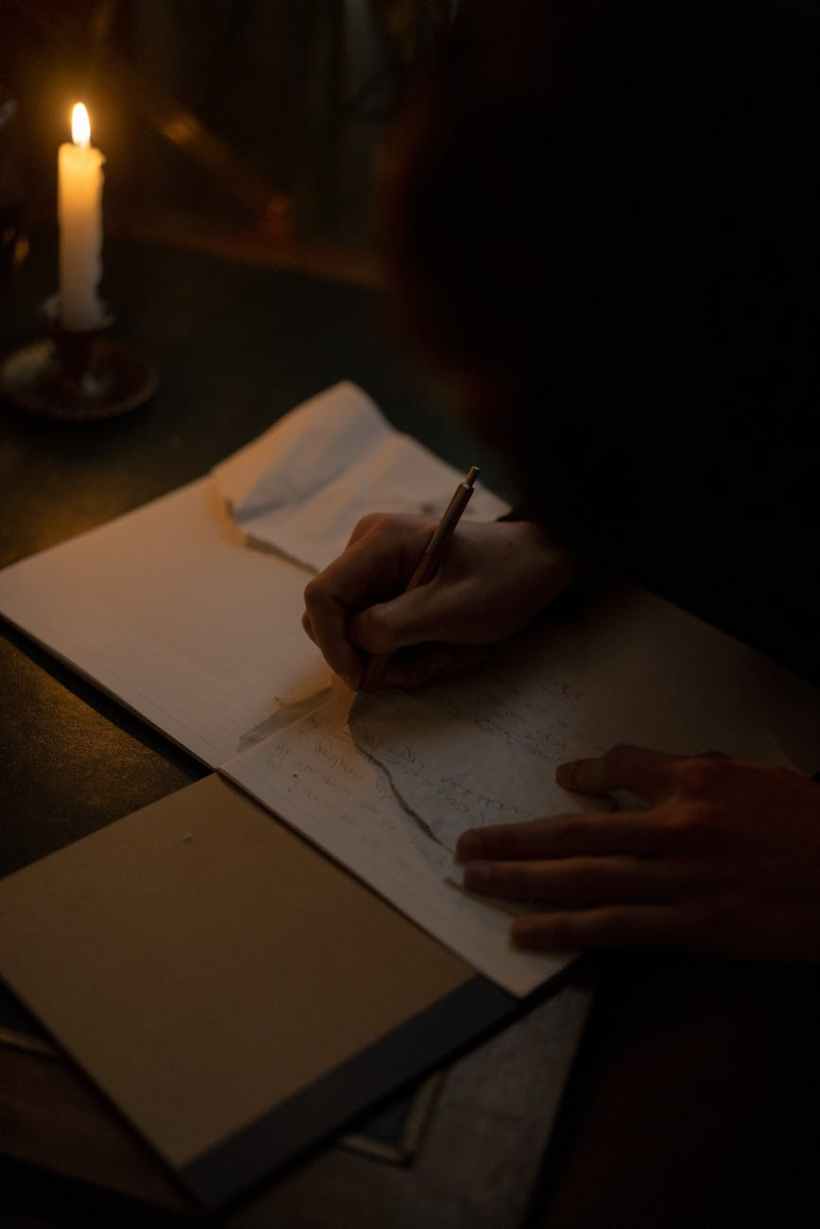
I caught myself writing poetry again.

The kind that never rhymes,

the kind that makes me wonder if it’s even poetry at all.

But maybe poetry isn’t about rhyme — maybe it’s about truth breaking loose in whatever shape it needs.

So here is one of those pieces.

One that arrived uninvited, but insisted on being written.

In the middle of the chaos, at a hospital reception hall.

To My Daughter, If Ever One Day

By Therese Christensen

There was a time in my life when I worked in the field, supporting women who had survived violence. Some days were heavier than others—days when I’d find myself sitting alone in a café, trying to process what I had witnessed, feeling like the weight of their stories had followed me home.

Sometimes, I escaped into romance novels. I bought nearly a thousand Kindle books. It was a safe kind of escape—where endings were predictable, where love was uncomplicated, where everything turned out okay.

But there were days when even fiction couldn’t hold me. Days when the pain I carried wasn’t mine to tell, but still needed a place to go. I was bound by tavshedspligt—a confidentiality agreement—so I couldn’t speak the stories. I wrote instead.

I remember typing these words into the Notes app on my MacBook. At first, I thought I was writing to a future daughter. But really, I think I was writing to the women I had sat with—the girls they once were—before the harm, before the silence.

Maybe I just wanted someone, anyone, to whisper in their ear: You are enough.


🌿 A Note in Retrospect

Reading this again, years later, I notice lines that don’t sit quite right with me now. For instance, the phrase: “If he chooses you as a partner…” feels off. It implies that the woman is waiting to be chosen like her worth depends on someone else’s validation. And that’s not what I believe.

The truth is, I have always believed in a woman’s agency. That has never changed.

But when I wrote this, I was echoing the voices of women in survival mode. So many of them told me they felt lucky just to be the chosen girlfriend or wife. That kind of language can be painful to hear but it’s real. And when someone is in survival mode, logic doesn’t always reach them. What does is compassion. Understanding. A hand extended, not a lecture.

This poem wasn’t meant to be perfect. It was meant to be safe. A quiet offering to women who hadn’t yet remembered their own power– but who were always worthy of it.


To My Daughter, If Ever One Day

Baby,
I know you love him
but never make him your world.

I know you just want to be a good wife,
but never at the expense of forgetting your worth.

I know you value his input,
but never doubt your own capabilities.

I know you’re being understanding of his work,
but don’t forget—you have a life to live too.

You are his equal.
If he chooses you as a partner,
he should see you as one.

Pamper him if you must,
but know the difference between caring for a man
and raising one.

You are not his mother.
You are his wife.

There are things you cannot change about him.
Some lessons come too late to be learned.
So choose wisely.
Take your time.

Know him.
Know yourself.

Marriage is not a marathon.
It’s a daily commitment
to yourself,
to him,
to honoring what you’ve chosen
again, and again, and again.

But since it is a marathon,
you don’t step into it unprepared.
You train.
You rest.
You build your strength.
You know your pace.
You come into it whole
knowing you are bringing something worthy.

Because you are.
And if no one ever told you that
let this be the first time.


Closing Reflection

I wrote this from a place of both exhaustion and hope. And now, with more distance, I offer it again this time with gentleness for the women who are still finding their voices, and for those of us who are still unlearning what we were taught about love, power, and worth.

If this speaks to you, I hope you’ll hold onto it. Share it if it feels right. Or just let it sit quietly with you for a while.

We all deserve to be reminded that we are whole.

You Haven’t Seen Me Do It Yet

She was the version of you that was a dreamer, the one who held the magazine in her hands and asked, What do these people do? The ones who wrote poetry.

Your brother was a year older than you. When he started high school at a new school, you stayed behind to finish grade school. One day, he came home with a school magazine, excited to show you all the new things about his school. You flipped through the first few pages absentmindedly—until you reached the literary section.

That’s where it happened.

Poetry, written by students. Words arranged in a way that felt like magic. Something inside you stirred, as if a hidden part of you had been awakened. You were twelve when the voices outside no longer mattered. You had already decided—you wanted to write. There was something powerful about it, something in the way words could transform a moment, a feeling, a life. It was enough to make you forget, for a while, about wanting to be a fighter pilot.

That magazine sat in your bedroom for so long, a quiet reminder of what you loved. But then the world outside began to rattle you. You saw what everyone else was doing, weighed reality against the uncertain path of a writer. Stability was what they all chased. Nursing, they said. So you can leave the country, build a future.

But in your heart, writing pulsed louder than reason. Still, the warnings came: There’s no money in it.

Yet you were never the type to listen, were you?

Decades later, during an online writing course, you were given a task: Picture a version of yourself who could help you push past the block that felt like a boulder in your writing process. It was an interesting exercise, but you hadn’t expected the realization that followed.

The 39-year-old you needed the 12-year-old you—the girl who was so sure about writing. She might not have been confident in other things, but she knew, without a doubt, that she could write.

Then the coach asked us to name that thing, that object we envisioned—something to carry with us whenever we needed it again.

I thought for a moment before answering.

“You,” I said. “Myself. All the versions of me.”

If there’s one thing both fantastic and dangerous about you, it’s that you tend to answer doubt with a simple, unwavering:

“Well, you haven’t seen me do it yet.”

Resilience

She Had Pink Hair and a Pink Sweater

She was around nine or ten when she approached me with a shy smile.

“Frederik speaks very good English for his age,” she said. “I’ve been around, heard him a couple of times, and I thought to myself, he’s really good.”

“Thanks,” I said. “You see, Frederik’s mother tongue is English.”

“Oh, that’s cool. Very cool.” She nodded.

I started walking, preoccupied with a lingering thought—had I set my parking timer? But then, from the corner of my eye, I noticed a pink jacket following me.

“I’m normally close to smaller kids because they ask for my help when someone bullies them, you know. I fight for them. And then the bullying stops. I’m good at fighting. Because when I was doing karate, I was bullied too.”

I stopped walking. I gave her my full attention. She smiled, and it broke my heart.

“Bullying someone is really not okay,” I said softly. “I’m sorry. What happened?”

She zipped and unzipped her pink jacket. Up and down. Up and down.

“They called me ‘gay’ and said I was ‘weird.’ They called me names, and it hurt, you know. I wasn’t really happy after that, so I left the club. I’m okay now. I’m alone sometimes, but I’m okay. I just walk around here during breaks.”

“Do you have friends here at school?” The mother in me was worried.

“I have a best friend. But when she’s not around, I just walk around alone.”

Reaching into her pocket, she pulled out her magnetic marbles and offered them to Frederik. “Do you want to feel them?”

I stopped walking. She stopped at the same time.

I looked at her and said, “There is nothing wrong with being gay, you know. You get me? Nothing wrong.”

I received the most priceless smile—one that reached her eyes.

This small, innocent conversation with this little pink-haired protector of smaller humans now sits in the top five most genuine and insightful conversations I have ever had.

The stoned man on my street and the man who wore Tommy Hilfiger shirts and Nike shoes


Life is still beautiful and I dare to live it

(This was an article/ piece I wrote nearly two years ago for MeToo)

I have weighed the consequences of writing this piece and how this will be taken by society with the current war on drugs in my country. There has been an on-going war targeting the drug addicts because they will eventually turn into the monsters that will rape you, rape your sister, your mother, your daughter. There is a prevalent “take the offensive rather than be sorry” sentiment. I have heard it, I’ve seen the news feed on some of my Facebook friends’ walls, and I am there, lost as to how we can be so easily fueled by fear because of the political spinners. We forget that there are monsters scarier that the ones high on drugs. There are scarier monsters lurking in their branded Tommy Hilfiger shirts and Nike Airs.

I was around 6 or 7 years-old when my Mom and aunt warned me to be home before sundown because there was a drug addict near our place sitting on an empty lot. A scary man who was always stoned and stared blankly. We normally passed him in the morning on my way to school and in the afternoon after school. Same spot, same oblivious, empty look. They told me he was a scary man, a crazy man. Stay away from him. So I stayed away from him. When walking on that road growing up, I made sure to cross the other street to avoid him. I associated scary and crazy with his red eyes and tattered clothes. Looking back, I think I made a total disservice to the rest of the respectable people who have no means to buy new clothes and are easily dismissed by society as the scary ones to be watched-out for.

Then, college came. No one told me to be careful of this other type. I was never ready for the monster who wore Tommy Hilfiger shirts and Air Jordans. He didn’t fit the bill. He flew right through my radar. My mom and aunt never warned me of his type. I was conditioned to protect myself when it came to the stoned man on my street, but had my guard down when I met the man with branded clothes. He was good looking, in the same college as I was so he can’t be bad right?Wrong.

The social consensus on what a rapist looks like and who the rapists are, had me doubting myself whether I was raped or not. There were doubts in my head, but there were also certain things that I was sure of when the raped happened.

I can close my eyes now after nearly 13 years and can still see that day vividly, where the younger version of me physically kept stopping him from touching me, yet where he repeatedly forced his way on me. I can clearly see me on the bed staring straight right through the ceiling with no eye contact whatsoever with him. I remember the feeling of being trapped, caged and not knowing where to go. So I allowed my mind to float. There was that moment of fight, flight and froze in me, a moment wherein I questioned his ownership of my body, who would believe me, the one who cried rape. All these thoughts capsuled in a minute or two.

I remember my white cotton underwear, with strawberry glitter print on the floor.

Innocence, taken from me without my consent.

I remember my white vest, long sleeves shirt and cargo pants. Those were not sexy clothes, as was/is commonly understood, but it happened. The rape happened.

In my current line of work assisting young women in Denmark as Au Pairs and women who are exposed to violence doing workshops on sexual consent, it is often that I encounter comments from the group, e.g. “If only she wore decent clothes she would never have been raped”. Or another: “If she stayed out of that alley and went home early she would have been safe”.

These comments are reflective of how rape culture is in our society. When the president of the country passes rape as a joke, be it Duterte or Trump, how do you expect society to behave?

Rape is seen as trivial. A side note. Women who went through the incident are seen as just too liberated for their own good.

“She should have stayed home”.

“See what happens when you don’t wear decent clothes?”.

I don’t blame them, but I now have the means to facilitate change and make them understand their tolerance towards something that should never be tolerated in the first place.

Society prompts us to not get raped, instead of stop raping. But there is a shift with men taking part in the dialogue of ending violence against women. There are survivors standing up, doing something remarkable. Harvey Weinstein’s sexual assault against 31 women sparked a campaign called #MeToo. Social media erupted with #MeToo everywhere. Eleven countries and around and 4.7 million people used this hashtag in social media.

There are those who criticize the campaign as just public outrage without political backing, which will eventually die down.

I take a more positive outlook on this; I believe that when society as a whole takes this as a problem, without pitting women against men, something will happen. It slowly is happening with men doing #HowWillIChangeThis.

There was that sense of euphoria-healing when I slowly typed the word #MeToo on my Facebook wall. It was powerful to feel how it was to take back something that was forcefully, without regard, taken away from you by someone you trusted.

Thirteen years. That was how long it took for me to share my voice, which made me reflect on the women I came across in the project with #DannerDK who are not ready to come out from their abusive relationships.

Not because they want to stay, but because they are trapped.

Typing #MeToo was more than a hashtag for them. It was risky. It meant life and death for them, losing their children, risking their visas, shamed, devalued as a woman.

Theirs are the voices I still worry about. Theirs are the voices that the ones who were able to type #MeToo need to empower.

So that one day, in their own time, they can finally say #MeToo, then add #NoWomanLeftBehind.

My Love Affair with Autumn

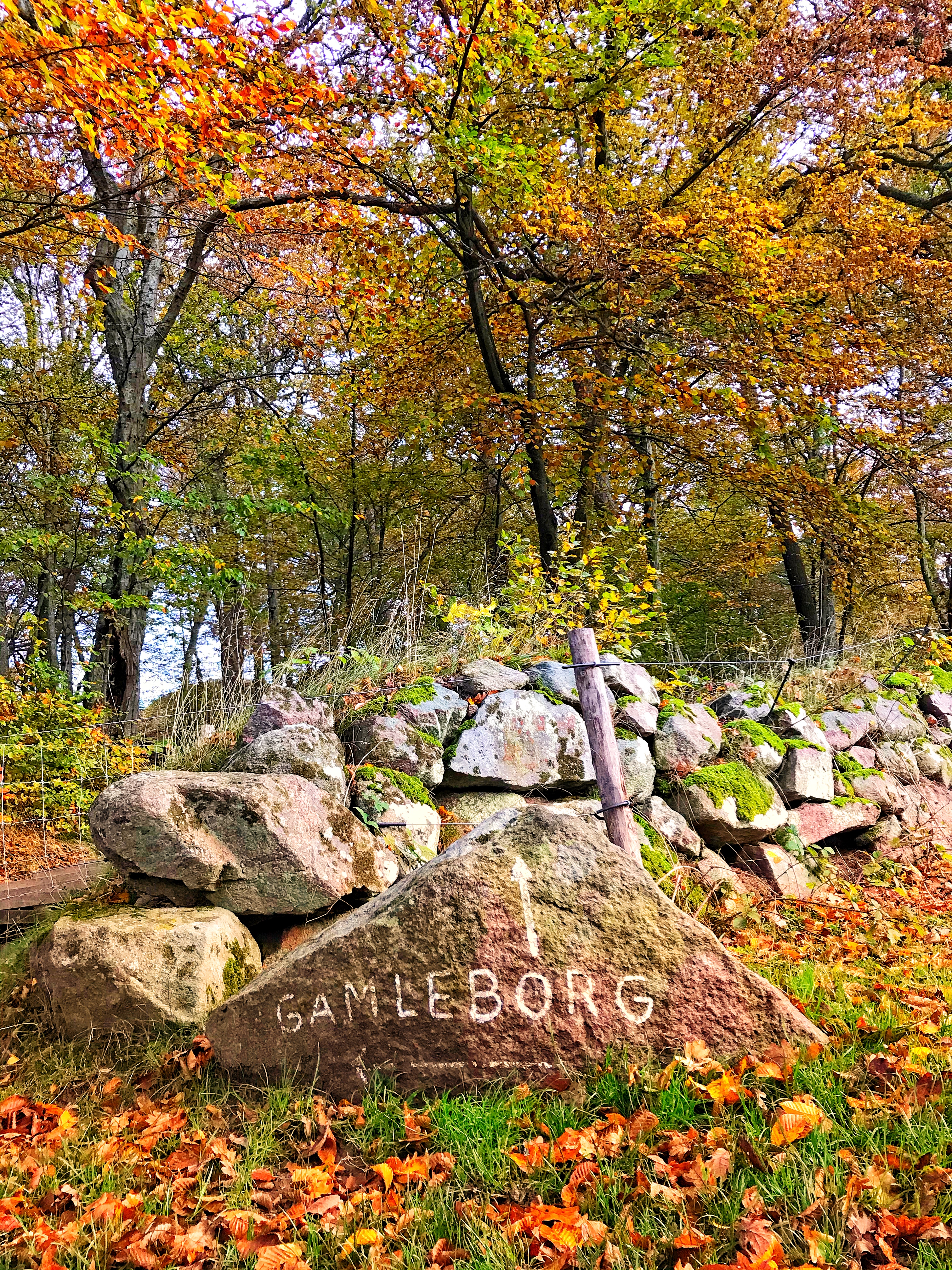
Almindingen Forest is the fifth-largest forest in Denmark.
Helligdagen Klippe

Before I even knew the titles of the movies my mom used to watch on our small-screen TV, I was already hooked by the beauty of leaves falling and the lead lady wrapped in her trench coat with heeled boots. At 12, I thought, it must be magical to live in a place where you can experience the four seasons. Wearing boots with a scarf around your neck looked so chic.

So when I imagined an adult Therese in the secret places of my mind, I saw myself walking the streets of London—foggy, wet London—just like how Elizabeth Wakefield nervously walked because there was a werewolf on the loose. My frame of reference for what the world outside looked like was based on the books I hoarded in high school. I would skip lunch just to rent books.

I let the words of authors sweep me away to places I couldn’t afford to see. I felt the Highlands through words. I saw castles, their turrets, and beautiful arches through another person’s eyes. I fell in love with the green leaves slowly turning yellow, then brown, before finally falling—a promise of reprieve through the flat, Times New Roman font. It was the cheapest way to travel, and it was beautiful.

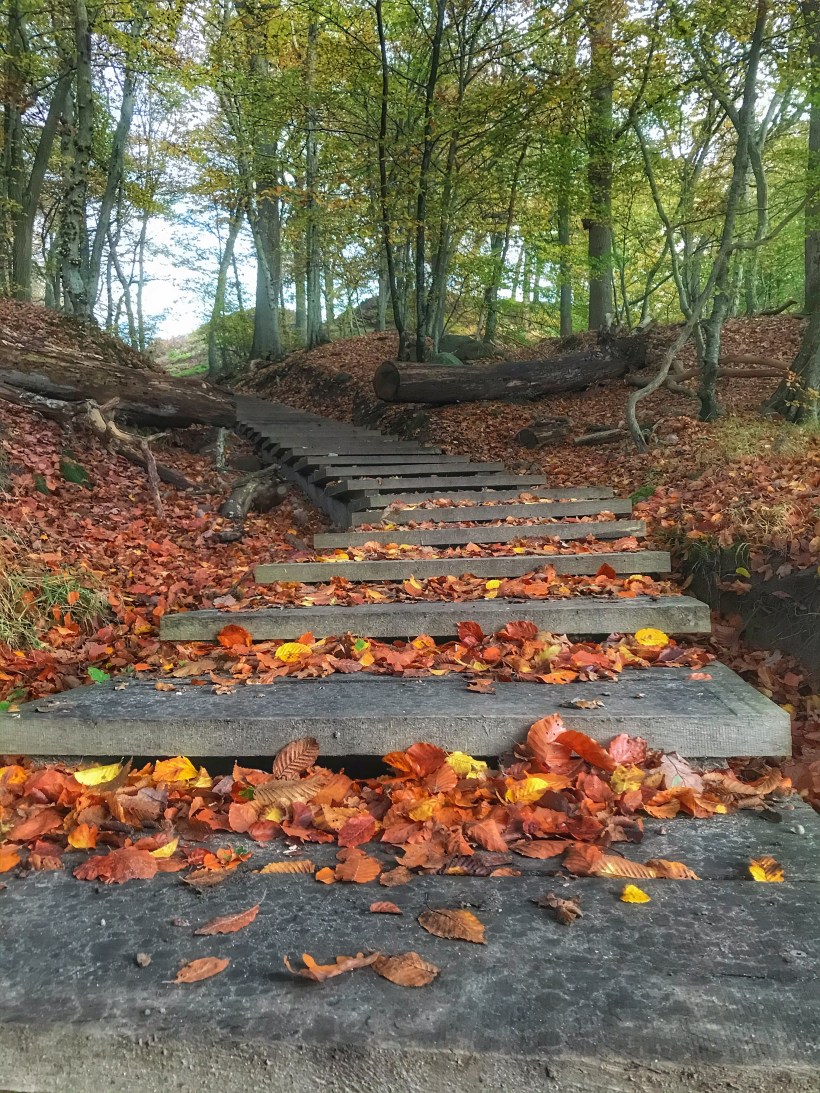
Fast forward 20 years. Autumn is still beautiful. It is still my favorite season. But now, it’s more than just the colors changing. To me, autumn is the season of reassessment, of allowing yourself to rest and truly ask what it is you want in life. The colors change, but the core remains.

As we walked through the woods, Frederik asked me if trees die when their leaves fall. I told him no. The falling leaves allow the trees to conserve their energy, to nourish what truly matters—their core—so they can survive winter and bloom again in spring.

And as I trudge my way through autumn, I’m letting my own leaves fall—the expectations of what could have been, the weight of what must be done, the battles I’ve fought, and the feeling of failure after trying so hard. I am letting it all go. Feeding my core first. Embracing the transition. Welcoming the possible, scary emptiness of winter and the quiet hope that spring promises when it finally comes.

***

Racing You

DSC04405
Bisonskoven (Bison forest) Almindingen

Racing You

When everything around you is moving fast, slow down. There will be days when you feel the need to win the race.

I remember when you were four years old and winning was everything. During one of your rhythmic classes, there was an exercise where you had to hop from start to finish. But hopping wasn’t fast enough. The rule slowed you down, and you weren’t the fastest. So, for a split second, you looked around—and instead of following the rule, you broke out and ran.

Of course, you finished first. You were overjoyed, jumping up and down with excitement. The other parents and kids weren’t as happy, but you didn’t care. You had won. Your dad leaned over and whispered to me, “Babe, F only understands how to win. He thinks it’s a race.” I smiled and agreed.

But in that moment, I noticed two things I want you to remember—just in case you forget when you’re all grown-up, caught up in the important ‘grown-up’ stuff.

First: Don’t be afraid to break away from the pack when you see the direction isn’t where you want to go.

I hope that, by now, we have guided you well enough to discern your values, morals, and principles. There will be times when staying with the group feels safe. I won’t argue with that—it’s natural to seek comfort in your clique. But safety isn’t always the same as rightness. Sometimes, stepping away is necessary.

Second: Don’t let the world define your success.

Everyone around you will be chasing the next big thing—the latest, the greatest, the best. But don’t measure your worth by society’s version of greatness. Success comes in many forms. There is no single definition of it. I want you to define success for yourself. I want you to be the best you.

The struggle will be hard. So when it feels overwhelming, remember what your dad once told me, when I was learning how to stop conforming to the ways of the world:

“Give zero f*cks to those who don’t know you and your struggle.”

***

There is strength in vulnerability

IMG_7883
Egeby Stubmølle

I have met so many people in the last ten years I have been in this cold Nordic country. Some described me as the silent but fierce type but would quickly add never to underestimate my meekness because I bite. I guess that was the hardest part for me when I decided to move away from the capital. How do I come to terms with the expectations I placed on myself from our decision?

Copenhagen is beautiful, but Bornholm is therapeutic and mystical.

There was a push and pull within me that only my closest friends could understand. It was as if moving meant giving up the fight. The fight was fought in several different areas. First, the advocacy work for women and their children, to which I gave the same amount of fervor as being a mother. Then, the struggle to prove that my existence in this country should not be mediocrity, so I gave back to the point of exhaustion. Another thing that I was personally advocating for was breaking the stereotypes placed on Southeast Asian women, to have their stories heard on their own terms, so their truths would not be twisted. Lastly, but burning fiercely like the rest, is migrant representation—or at least a fighting chance for migrants to get into the Danish labor market with assessment based on capacity and not on one’s ethnicity. In my head—my little bubble, if you must—if we can create another way to lift the Filipina identity, we might be able to pave the way for the rest so that they are allowed to be more. I am and will always be firm in my stand that service jobs, cleaning jobs, are never to be frowned upon; these are all respectable jobs. I had been in one before. But this also should not be the be-all and end-all—a prison for those who dare to dream a little bit more.

Before we left the capital, I carried the façade that everything was good and great. But the truth was, I was scared. I had worked with women and isolation, and I was trying to cover all the bases so I was prepared for anything and everything. My husband, with his pure heart and his kind soul, told me, “Babe, take this move as a healing process for you—it is, after all, an adventure.” I smiled and hugged him. He might have taken my actions as an agreement, but in my head, I was preparing for a battle. So I gathered all the intel I needed, created a plan, got counseled by those whose opinions mattered—closest friends and fellow feminists. It was my way to console myself, to ask for forgiveness because it felt like I was giving up. One of them suggested that I watch Brené Brown’s talk on vulnerability to get a shift in my perspective.

It was greatly appreciated.

Brown said in her TEDx presentation that, “Vulnerability is the birthplace of innovation, creativity, and change.”

I’m 33 years old. I want plans. I want timelines. I hate vulnerability because, to me, it equates to bad planning and weakness. Uncertainties for me meant sleepless nights, worrying, and weighing my worth, and to strategically place myself in that position sounded crazy.

But Brown was right: “One can choose courage or one can choose comfort, but one can’t have both. Not at the same time.”

In my world, my comfort was in my position, in my work, in my area of so-called expertise because I went through hell to be where I was. But I tried to shake myself a bit, trying to remember a conversation with a fellow colleague-friend whom I lost touch with after some time. It was after a dreadful afternoon filled with case after case, where we discussed how we could keep going and helping those women in vulnerable situations. She said the fight must not stop, and I agreed because I knew that we cannot shake off injustice when we see it every day in all the years of work. But I also told her then that my only hope—a prayer, if you must—was that I would be granted the grace to leave when the time came that I could see myself slipping. If there were someone more passionate to fight for the cause, I would step aside and give what little space I had so that person could ignite a wider fire.

This is where I detest admitting that I might be reaching the point where I need to take a breather. The fire is still there, but my body is revolting against me, and although the passion remains, doors are temporarily closed. Sometimes life gives you these moments when you need to see these turning points as an aid. The stop isn’t really a stop but a respite to something better.

Think. Innovate. Create.

I’ll be on the island. I’ll take all the time that I need. But I am not stopping my advocacy. I am just going back to my core.

***