Standing in the middle of Copenhagen Airport, I was surrounded by a flood of arriving and departing passengers. My legs were frozen, my thoughts tangled. This was the farthest I’d ever been from home, and reality was setting in: I was completely on my own.
I had just survived my first international flight, a terrifying encounter with the National Bureau of Investigation, and the silent anxiety of pretending I had it all together. But now, the adrenaline was wearing off. The signs were in Danish. The people looked nothing like me. The air smelled different. Everything felt foreign.
My undiagnosed Autistic ADHD kicked in full force. The chaos of noise—announcements, luggage wheels, people rushing past—overwhelmed my senses. I didn’t know what a meltdown was back then, but I remember the symptoms clearly: dizziness, cold sweats, a racing heart. It was the same feeling I would later recognize as a panic attack.
But in that moment, I did what I had always done—I masked. I smiled and kept moving, even though I could barely read the signs.
There was something about how the air hit my face that morning—crisp, sharp, unfamiliar. The colors were different too. Cooler tones. Harsher light.
I wasn’t looking for anything familiar. I was too caught up in the difference—the way everything looked, sounded, even smelled. Strangely, the unfamiliarity soothed me. It felt like stepping into a world that didn’t expect me to belong, and for the first time, that felt like a kind of safety.
“Therese, what have you gotten yourself into?” I remember thinking.
Just then, like a beacon of light, I spotted a young man in a green shirt that read “ASK ME.”
I walked straight to him and asked how to get to my terminal for the domestic flight to Karup.
He kindly explained that I needed to take the free shuttle to Terminal 2, pointing outside.
“Across the street,” he said.
Still high from anxiety and confusion, I asked—very seriously—“Wouldn’t it be better if I just take a cab?”
He laughed. Gently. Not mean, just amused.
I took that laugh in both ways—with curiosity and confusion. Was there something I wasn’t seeing? Was I missing something crucial? I wasn’t angry, just uncertain.
That moment was my first taste of cultural difference, though I wouldn’t fully understand it until much later. I didn’t know then that Denmark is one of the most expensive countries in the world to take a taxi. That laugh wasn’t mocking, but it left me wondering what rules I hadn’t yet learned.
So I thanked him and stepped out of the terminal. The sunlight was bright, but not warm. It had a bite to it. Across the street, I spotted the shuttle stop—a small, glass-covered waiting area. Nothing fancy, just functional.
I stood there alone, soaking it all in. The quiet was surreal. No honking horns, no shouting vendors, no traffic rumbling in the background. Just stillness. A kind of silence that felt both comforting and intimidating. The air was clean, the surroundings orderly—so different from what I was used to. In that stillness, my thoughts felt louder, like they had nowhere to hide.
And then, right there, my suitcase betrayed me.
It popped open with a soft but very public thud, spilling out the organized chaos I had packed just days before—jeans, a sweater, my four pocketbooks (painstakingly chosen because of the limited space), and a folder containing my au pair contract.
My life scattered in front of the Hilton hotel entrance like an accidental overshare.
The bus driver gave me a look that felt like a ticking clock. I scrambled to gather everything.
This wasn’t home anymore.
I shoved the zipper closed and dragged my suitcase onto the shuttle. The seats were clean and stiff, and the windows offered a surreal view of manicured streets and pristine sidewalks.
As the shuttle pulled away, I looked out the window and took my first real breath since landing.
I whispered to myself, You did it.
Even though everything in me was saying, You have no idea what you’re doing.
When we arrived at Terminal 1, I reminded myself to act like I knew where I was going, that I belonged here, that this wasn’t my first rodeo. I repeated the mantra my best friend from high school used to say: “You gotta fake it until you make it.”
I followed the signs with my head up, shoulders back, trying to carry myself like someone who belonged—even if, inside, I was unraveling.
I remember thinking:
No one here knows me.
No one knows my name.
No one knows what I left behind.
No one knows what I’m afraid of.
And for the first time in my life,
I was truly alone.
But also—for the first time,
I was free.
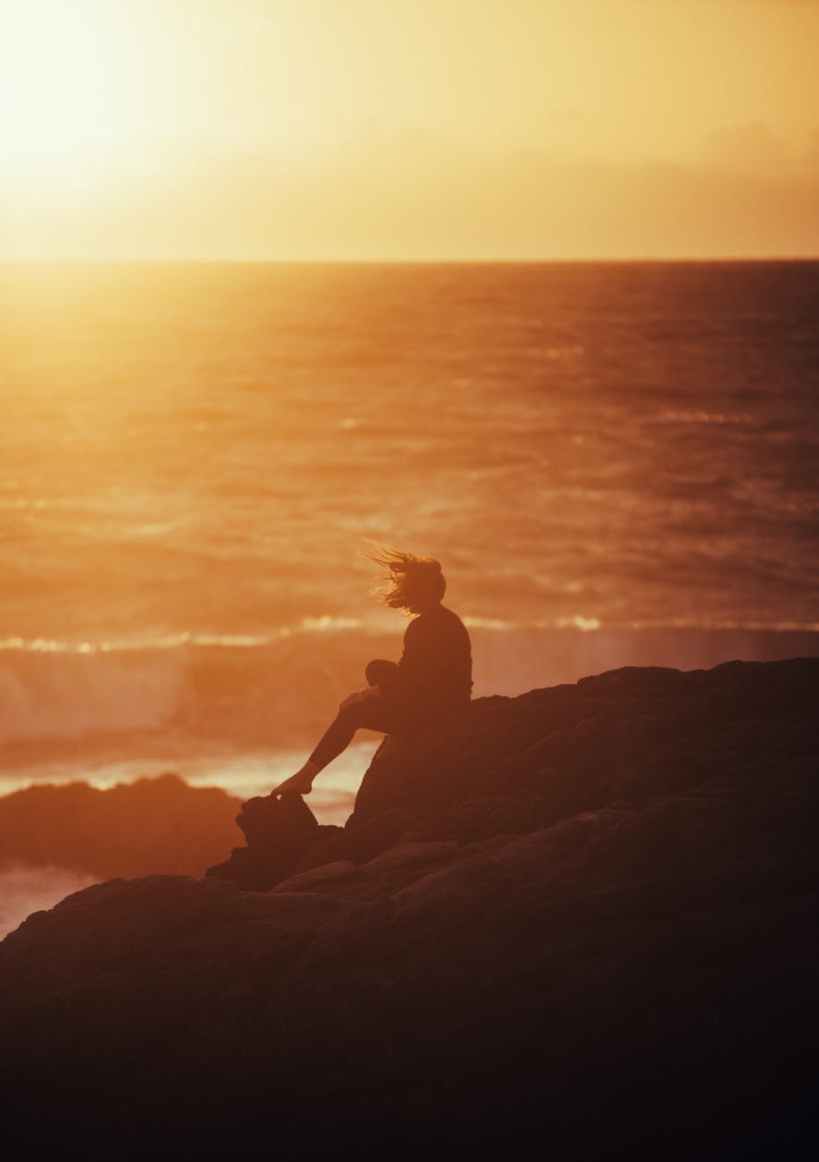
It was the kind of freedom you feel right before you rappel down a cliff—feet on the edge, rope in hand, suspended between trust and terror.
💬 Coming next: Meeting my host family, the open-faced sandwich surprise, and learning what it really means to “start over.”
💙 Have you ever felt completely out of place but knew you had to keep going? I’d love to hear your story in the comments.
 ThereseChristensen