In 2008, a young woman of twenty-two years old dared to take the adventure of a lifetime. She left her country and ventured into something new. She was the first from her family to leave the safety of home. She relinquished connections and stability to test her boundaries and see how much further she could go until she broke. Armed with two pieces of luggage—one with her clothes and everything she thought she would need for eighteen months, and the other filled with idealism and naivety, wrapped in a sparkling smile and enthusiasm—she was ready to embrace everything new.
It was monumental.
It was freedom.
It was heartbreak, but it was also an awakening.
I always toyed with the idea of writing about my experience as a young Filipina migrant woman in Denmark. There are so many things I want to share. But I always decided against it because I thought it was too egotistical to write about oneself. I always had this little voice in my head questioning my own experience. How can I have the audacity to think that my experience is so unique that people would actually want to read my story? There are a million Filipino migrant women in the world—so why my story? This bugged me for years.
But then I realized—it was not about me. It was about the chance I was given to be in the middle of so many different lives, witnessing struggles and hurts that all mirrored one another. I was simply there, observing, feeling, and penning them. I could flesh out the experiences through my words and allow the pain and the struggle to be exposed for what they are, without glossing over the authenticity of a migrant’s experience. To open wounds so they wouldn’t fester on the inside. And to let my story speak for the ones who have been silent for too long.
Stories were written about us—we listened to what was told about us. But now, it’s time to reclaim the narrative, to tell the story from our own lenses and experience. Our stories. Our voices.
We are often seen as “the good” migrant community. Sometimes, we don’t want to challenge that perception because the consequences can be severe for those living abroad, supporting families back home. These consequences range from the instability of one’s right to stay in the country to the fear of losing one’s child after leaving an abusive relationship. There is the fear of being ostracized by the Filipino community for not fitting into the mold of the “good Filipina woman,” even from a continent away. And then there’s the looming fear of the hunger the family left behind might have to face at home.
She—the migrant woman—already juggles multiple identities: a good migrant, a woman, a mother, a wife, a sister, a daughter, a survivor, an adventurer, liberated and shackled all at once. She has to play all these roles flawlessly, but who taught her that these are the rules?
We were taught to play by the rules.
We were taught to always obey authority.
We played by the rules, we obeyed authority, but we forgot that the game had changed.
The rules we learned didn’t apply to our current situation, and the authority we were told to respect crossed our boundaries. They took our “no’s” as “yes,” and our silence as acceptance and submission.
Yet, we still want to be the “good migrant.” The woman who gives her warmth and smile. But sometimes you can still be a “good migrant” who smiles—a smile wrapped with a meaningful “fuck you” to whoever thought of you as nothing more than a doormat.
They said I had good material to write a book. That my collated experience as a migrant woman working for migrant women would be enough to break the silence. But then I paused.
Silence.
Writing.
Thoughts in images flashed before my eyes so fast, like 200 km/h. Each frame a story demanding to be told.
Can I really do justice to their stories? Will my writing be good enough for even a slight change? In the safety of my own home, where I hug my boys to sleep each night and share a warm blanket with my husband, there is a fight. A fight beyond me, beyond my fears. A fight that I still burn for—a battle raging against patriarchy.
The current political climate in Denmark tends to erase the existence of these migrant women in subtle ways, smothering them into silence with policies that leave them vulnerable. Their narratives are wiped out, their experiences invalidated, as their silent cries are ignored.
I was at a conference in Cairo, talking to someone about our advocacy. He told me that he fully understood he wouldn’t see the impact of his work in his lifetime.
I replied,
“We are but a pebble—I’m not naïve to not consider that—but I believe in the ripple.”
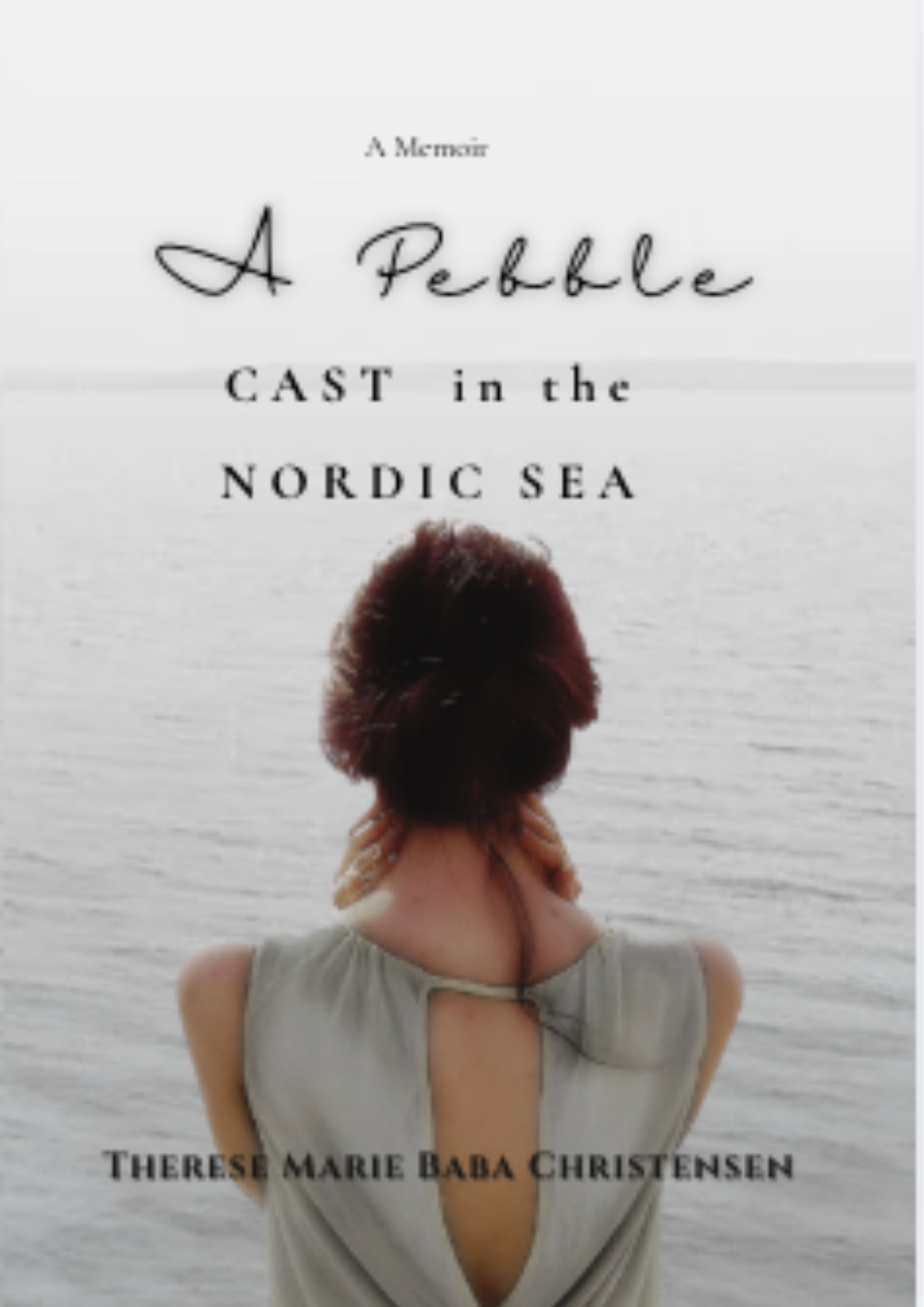
This book is my pebble.
I’m casting it into the cold, still waters of the Nordic Sea, hoping for a ripple wide enough to shake the silence.
Chapter 1, Part 1: Young Idealist – The Beginning of a Journey
I was rocking my white ribbed tank top, blue low-rise jeans, a pair of brown suede boots, and a brown furry factory-defect Abercrombie and Fitch jacket. It was the most outrageous outfit to wear for an early summer morning in July 2008. But there I was, stepping onto Danish soil for the first time at Copenhagen International Airport—excited, nervous, and completely unaware of the whirlwind that lay ahead.
Inside my backpack was my passport, freshly stamped with a tourist visa for Denmark. But I wasn’t here to be a tourist. I was about to start a new life as an au pair for a Danish family in Jutland.
Getting here hadn’t been easy. Securing an au pair visa required navigating layers of bureaucracy back home in the Philippines. But the real adventure began long before I even boarded the plane.
I had been singled out by an agent from the National Bureau of Investigation during random checks for departing passengers at the airport. There were long lines of travelers queuing for early baggage drop-off, and as I stood there waiting, the agent spotted me.
“Where are you going?” he asked.
“Denmark,” I replied.
“Traveling as a tourist?”
“Yes,” I added, keeping my face neutral.
He nodded, then motioned for me to follow him to their office. That was the moment my fate for the day became uncertain.
Coming Next: Chapter 1, Part 2: Thrown Into a New Reality
My arrival in Denmark, navigating a foreign airport, and the moment I realized I was truly alone for the first time.
💬 Have you ever faced an unexpected obstacle just before a big life change? Share in the comments.


 ThereseChristensen